
For the communities we serve, and ecosystems we protect.
Rodne R. Galicha is an environmental advocate, educator, writer, and community worker from Sibuyan Island in Romblon, Philippines.
His work has taken him from island communities to classrooms, government and civil society spaces, and international environmental negotiations. Across these different places runs a common concern: how people can live with dignity while caring for the land, waters, cultures, and communities on which life depends.
Much of that work begins with Sibuyan.
Rooted in Sibuyan
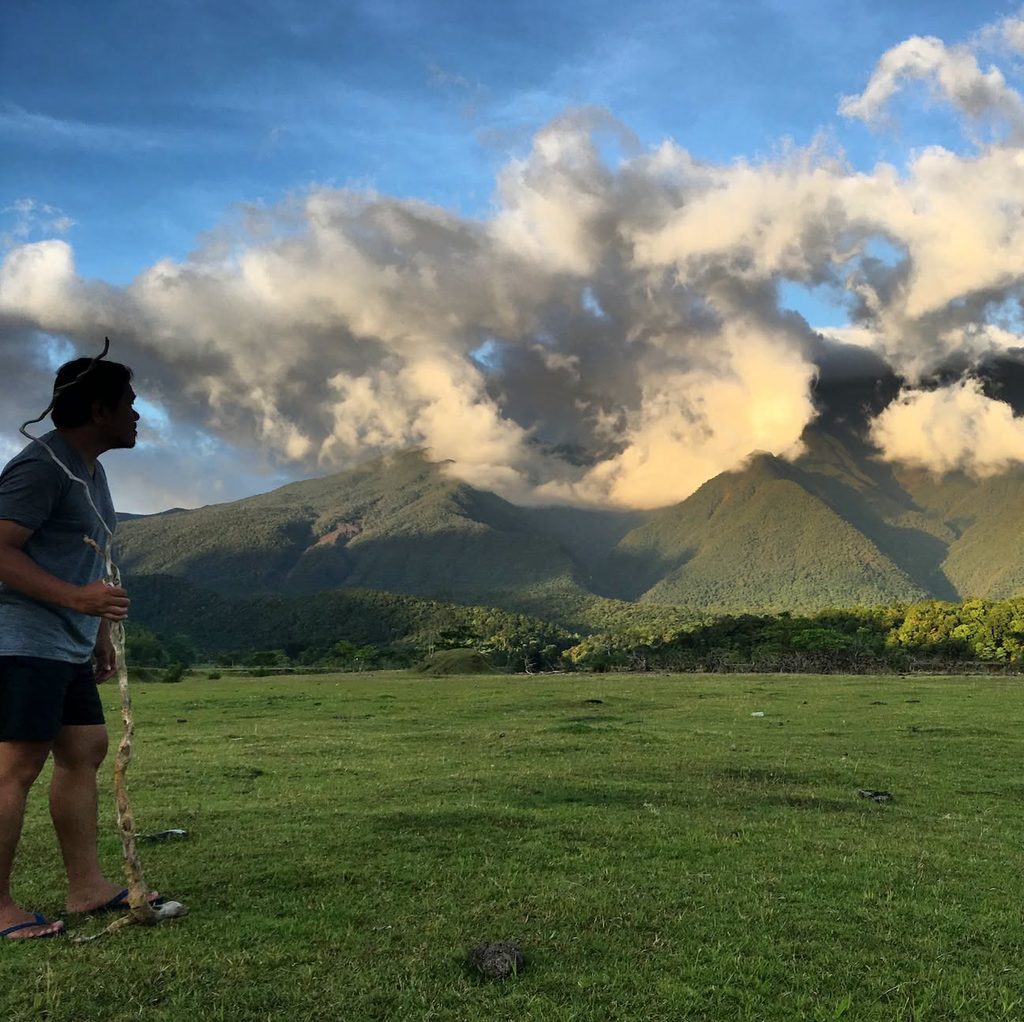
Rodne grew up on Sibuyan Island, surrounded by mountains, forests, rivers, farms, and the sea. The island remains home and a continuing point of reference in his work and writing.
Over the years, he has worked alongside communities on environmental protection, local governance, biodiversity conservation, climate resilience, and the defense of Sibuyan’s natural and cultural heritage. He serves as Chairperson of Bayay Sibuyanon Inc., a community-based organization working for the protection of the island and the well-being of its people.
The long struggle over mining on Sibuyan has been an important part of this journey, but his engagement with the island extends beyond mining. It includes questions of forests and watersheds, coastal ecosystems, agriculture, local livelihoods, governance, culture, and the future of island communities.
Sibuyan is not simply a place where he works. It is where many of the questions that continue to shape his life first became real.
Philosophy, faith and formation
Rodne’s intellectual formation in philosophy at the University of Santo Tomas introduced him to questions of freedom, truth, language, responsibility, the human person, and society.
Philosophy eventually became more than an academic discipline. It provided a way of approaching the tensions he would later encounter in environmental work: between development and ecological limits, individual freedom and responsibility, competing claims to truth, and the relationship between the human person and the larger community of life.
His engagement with Catholic social thought and ecological theology later brought these questions into conversation with faith.
He completed a Diploma in Integral Ecology at the Pontifical Gregorian University in Rome and teaches at the Don Bosco School of Theology, where he has been involved in the formation of students and communities around Laudato Si’, integral ecology, environmental ethics, climate justice, and related concerns.
For him, ecology is ultimately also a question about the human person—what we value, what we owe one another, and how we understand our place within creation.
From community to public life
Rodne serves as Executive Director of Living Laudato Si’ Philippines and has been deeply involved in the Philippine climate movement, including through Aksyon Klima Pilipinas as National Convener.
His work has brought together community organizing, environmental advocacy, public policy, governance, education, research, and international engagement.
He has participated in national and local development processes, environmental and extractive-industry governance, and civil society initiatives dealing with climate change, biodiversity, mining, ecological justice, and community participation.
He has also represented Philippine civil society in international spaces connected with climate change, biodiversity, faith and ecology.
A fuller account of this work is available under Sectoral Work & Engagements.
Teaching and dialogue
Teaching remains an important part of his work.
Whether in a formal classroom, a parish, a community assembly, a youth gathering, a government meeting, or an international conference, Rodne approaches education as a form of dialogue.
He is especially interested in the places where different worlds meet: science and faith, philosophy and public life, ecological knowledge and community experience, global policy and the realities of small islands.
The aim is not simply to provide answers. It is also to ask better questions.
Writing
Writing has accompanied much of this journey.
Rodne writes about ecology, philosophy, faith, climate justice, governance, culture, and the experience of living and working from the islands.
Some writings begin with a public issue. Others begin with a memory, a landscape, a conversation, a philosophical question, or something encountered many years earlier whose meaning only became clearer with time.
This website brings together some of those reflections.
They are not intended as final answers.
They are part of an ongoing attempt to understand what it means to live responsibly—with other people, with the places we call home, and with a world that was here before us and will remain after us.
Awards and recognition
Rodne’s environmental and community work has received national recognition, including The Outstanding Young Men (TOYM) Award in 2018 and the Gawad Bayani ng Kalikasan.
These recognitions form part of a much longer journey of community work, environmental advocacy, education, and public engagement.
Sectoral Work & Engagements · Writings · Media & Resources